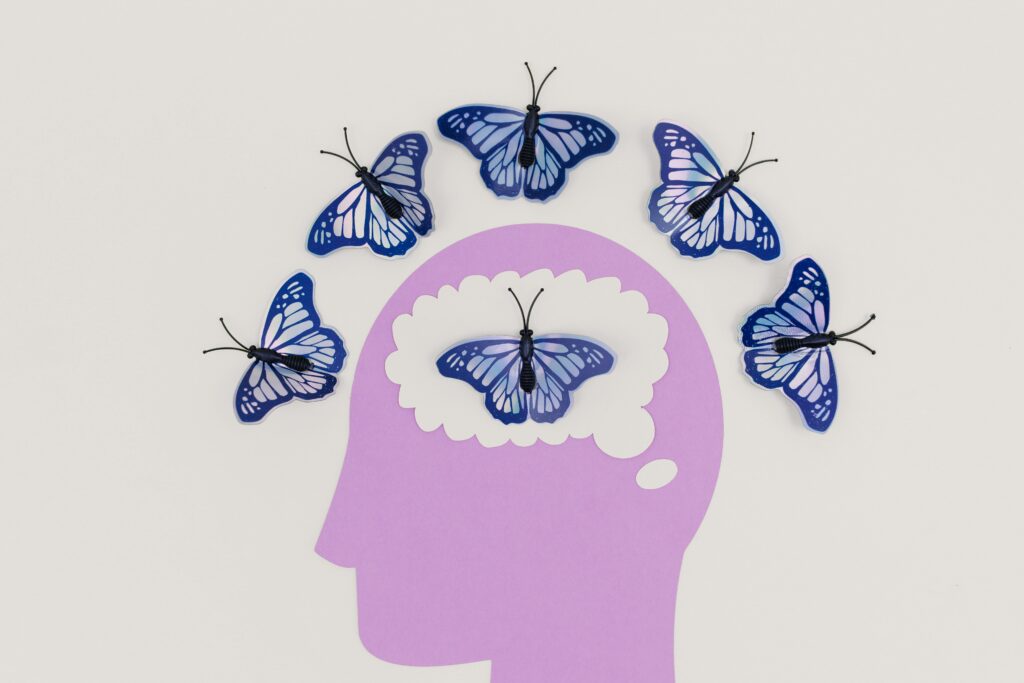
What Does It Mean to Be Neurodivergent?
Neurodivergent is an umbrella term used to describe people whose brains work differently from what society tends to call neurotypical or “standard.”
There are many ways this difference can show up. It may be neurodevelopmental, such as ADHD or autism, or it can be acquired later in life through things like brain injury or neurological illness. There are also other forms of neurodivergence that reflect different ways of thinking, processing, or experiencing the world - such as dyslexia or OCD.
For this post, I’m mainly focusing on ADHD and autism, as these are the people I most often work with. But even within that, it’s important to remember: if you’ve met one neurodivergent person, you’ve met one neurodivergent person. There are patterns, but no two experiences are the same.
At its heart, neurodiversity is simply the recognition that human brains are not identical. There isn’t one “right” way to think, focus, communicate, or experience life.
And yet, most of us grow up inside systems that quietly suggest there is.
Where The Idea of “Normal” Comes From
Much of what we call “normal” has been shaped by post-industrial systems of work and education - environments built around consistency, efficiency, productivity, sitting still, and following structured routines.
Schools and workplaces were largely designed with those values in mind.
So when someone’s brain naturally works in a more interest-led, sensitive, or non-linear way, it can easily start to feel like they are the problem, rather than the environment not being built for difference.
But that mismatch matters. Because not fitting a narrow idea of “normal” doesn’t mean something is wrong with you. It may simply mean the system wasn’t designed with your way of being in mind.
The Square Peg Experience
A helpful way of thinking about this is the “square peg in a round hole” idea.
The more pressure there is to fit, the more energy gets spent on shaping, adjusting, masking, and trying to become something else. Over time, that can lead to exhaustion, anxiety, burnout, and shame.
Not because the peg is wrong - but because it’s being pushed into a shape that doesn’t match it.
When Difference Gets Misread
A lot of the struggle neurodivergent people experience doesn’t come from the traits themselves, but from how those traits are interpreted by others.
I too often hear stories of children labelled as “disruptive” at school when they were actually overwhelmed. Or adults described as “lazy,” “flaky,” or “rude” when they were dealing with executive functioning differences, sensory overload, or simply processing the world differently.
Over time, these external interpretations can become internal beliefs:
“I’m unreliable.”
“I’m too much.”
“I’m not like other people.”
What began as difference starts to feel like personal failure.
Brains That Work Differently
There are real neurobiological differences underpinning these experiences, and understanding them can be incredibly helpful.
In ADHD, dopamine regulation works differently, affecting motivation, attention and reward. This isn’t about effort or willpower - it’s about how the brain responds to stimulation and interest. In autism, sensory processing and regulation can differ significantly, meaning environments can feel either overwhelming or deeply regulating depending on context.
When we understand this, it becomes easier to see that these are not character flaws, they are different ways of processing the world.
Shame, Masking And The Cost of Fitting In
Many neurodivergent people learn to mask - to hide or adjust their natural way of being in order to fit in more easily. To appear more “together.” More “normal.” More acceptable.
But masking takes energy. And over time, it can lead to burnout, anxiety, disconnection, and a deep sense of not quite knowing who you are underneath the adaptation.
What often gets labelled as “coping well” externally can actually feel like constant internal effort.
Understanding As The Starting Point
One of the most powerful shifts for many people is simply understanding themselves differently.
Not as something to fix, but as something to get curious about. When you understand your own wiring, you can start to separate who you are from the messages you’ve received about who you should be.
That creates space for self-compassion and for a different kind of life to become possible.
Support, Connection, and Coming Back to Yourself
Therapy can be part of that process. Not as a way of changing who you are, but as a space to understand yourself more deeply and gently, at your own pace.
I’m also running therapy groups specifically for people who feel different, because knowing you’re not alone really matters. Connection and community can help take the weight off shame and create space to start living more fully as yourself.
I also work 1:1 with people, offering a private space to explore your experiences, understand your traits, and develop self-compassion in a way that feels safe and grounded.
A Final Thought
Neurodivergence is not a flaw to be corrected.
It is a different way of being in the world - one that can bring both challenge and depth, especially in environments that weren’t designed with it in mind.